

Chhena Poda – Odisha’s Iconic Baked Sweet Delight
Overview of Chhena Poda
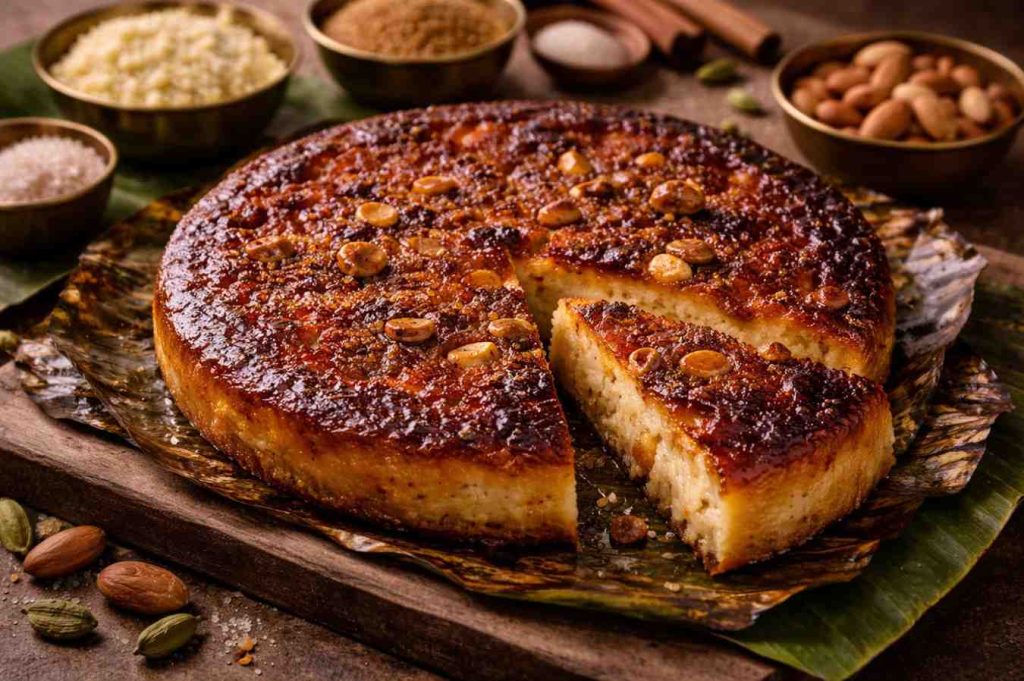
Chhena Poda is one of the most beloved and distinctive desserts from Odisha, celebrated for its rich flavor, unique preparation method, and deep cultural roots. Often referred to as India’s answer to a baked cheesecake, this traditional sweet stands out due to its caramelized outer layer and soft, melt-in-the-mouth interior. The name “Chhena Poda” literally translates to “burnt cheese,” which perfectly describes its signature appearance and taste—slightly charred on the outside while remaining moist and flavorful inside.
What makes Chhena Poda truly special is its origin as a happy accident that turned into a culinary masterpiece. Unlike many sweets that rely on frying or syrup soaking, this dish is baked slowly, allowing the sugar to caramelize and develop a deep, smoky sweetness.
What is Chhena Poda?
Chhena Poda is a traditional Odia sweet made from fresh chhena (Indian cottage cheese), sugar, semolina, and cardamom, which are combined and baked until the top layer becomes caramelized and slightly crisp. The inside remains soft, moist, and rich, creating a perfect contrast of textures.
The process begins with freshly prepared chhena, which is kneaded until smooth and then mixed with sugar and other ingredients. This mixture is then placed in a baking dish—traditionally lined with sal leaves—and slow-cooked over low heat. As it bakes, the sugar melts and caramelizes, giving the dessert its characteristic golden-brown to dark brown crust.
The flavor of Chhena Poda is complex yet comforting. It carries the creamy richness of chhena, the sweetness of caramelized sugar, and the subtle aroma of cardamom. Some variations also include nuts like cashews and raisins, adding texture and enhancing the overall taste.
Unlike many Indian sweets that are overly sugary or heavy, Chhena Poda strikes a balance between sweetness and depth of flavor. Its baked nature also sets it apart, making it a unique offering in the landscape of Indian desserts.
Origin & Cultural Significance
The story of Chhena Poda’s origin is as fascinating as the dessert itself. It is widely believed to have been created accidentally in the town of Nayagarh in Odisha. According to popular accounts, a sweet maker left a mixture of chhena, sugar, and semolina in a warm oven overnight. By morning, the mixture had baked and caramelized, resulting in a delicious new sweet that quickly gained popularity.
This accidental discovery soon became a staple in Odia households and sweet shops. Over time, Chhena Poda became closely associated with festivals, celebrations, and religious offerings. It is particularly popular during occasions like Durga Puja and Raja Parba, where it is prepared and shared among family and friends.
In addition to its festive importance, Chhena Poda also holds cultural value as a representation of Odisha’s culinary creativity. It showcases how simple ingredients can be transformed into something extraordinary through technique and patience. The use of traditional baking methods, often involving earthen ovens or charcoal heat, further connects the dish to its roots.
Today, Chhena Poda is not just a dessert—it is a symbol of Odia pride and identity. Its growing recognition across India and beyond highlights the richness of regional cuisines and their ability to captivate global audiences.
Types of Chhena Poda
Traditional Chhena Poda
This is the most authentic version, prepared using fresh chhena, sugar, and semolina, with minimal additions. It is baked slowly to achieve a perfectly caramelized crust while maintaining a soft interior. The focus is on preserving the original flavor and texture.
Dry Chhena Poda
This variation has a firmer texture with less moisture. It is baked for a longer duration, resulting in a denser consistency and a more pronounced caramelized flavor. It is ideal for those who prefer a less soft dessert.
Soft & Moist Chhena Poda
A popular modern adaptation, this version retains more moisture, making it softer and closer to a cheesecake-like texture. It is often preferred by those who enjoy creamy desserts.
Flavored Chhena Poda
Contemporary versions include flavors such as saffron, chocolate, or even fruit-based infusions. While these variations add a modern twist, they still maintain the essence of the traditional dish.
Ingredients Used
Core Ingredients:
- Fresh chhena (paneer made from curdled milk)
- Sugar or jaggery
- Semolina (sooji)
Flavor Enhancers:
- Cardamom powder
- Cashews and raisins
- Ghee
Optional Ingredients:
- Saffron
- Condensed milk
- Vanilla or chocolate essence (modern variations)
Each ingredient plays a vital role in creating the perfect balance of sweetness, texture, and aroma.
How to Make Chhena Poda (Step-by-Step Recipe)
Step 1: Prepare Fresh Chhena
Begin by bringing full-fat milk to a gentle boil in a heavy-bottomed pan, stirring occasionally to prevent it from sticking or burning. Once the milk reaches a rolling boil, reduce the heat and slowly add lemon juice or vinegar while stirring continuously. You will notice the milk curdling, separating into solid curds (chhena) and whey. Turn off the heat immediately to avoid overcooking the chhena.
Strain the mixture using a muslin cloth or fine sieve to collect the chhena. Rinse it thoroughly under cold running water to remove any residual sourness from the lemon or vinegar. This step is essential to achieve a clean, mild flavor. Gather the cloth and gently squeeze out excess water, but avoid making it completely dry—slightly moist chhena works best for a soft texture.
Step 2: Knead the Chhena
Transfer the prepared chhena onto a clean plate or flat surface. Begin kneading it gently using the heel of your palm. Continue this process for several minutes until the chhena becomes smooth, soft, and slightly greasy in texture. This step is extremely important, as proper kneading ensures that the final dessert has a uniform consistency without lumps.
Well-kneaded chhena should feel creamy and pliable, almost like dough. If it feels too dry, you can sprinkle a few drops of water to maintain softness. The smoother the chhena, the better the texture of your Chhena Poda.
Step 3: Mix Ingredients
Once the chhena is perfectly kneaded, transfer it to a mixing bowl and add sugar, semolina (sooji), and cardamom powder. You can also include chopped cashews and raisins for added richness and texture. Mix everything thoroughly until all ingredients are well combined and form a uniform, slightly thick batter-like consistency.
The sugar will gradually dissolve and release moisture, helping bind the mixture together. Make sure there are no dry pockets or uneven lumps. This step determines the flavor balance, so adjust sweetness according to your preference.
Step 4: Prepare Baking Dish
Take a baking dish or pan and grease it generously with ghee to prevent sticking and to enhance the flavor. Traditionally, sal leaves are used to line the base of the dish, which imparts a subtle earthy aroma to the dessert. If sal leaves are not available, you can use parchment paper or simply rely on greasing the dish well.
Proper preparation of the baking dish ensures easy removal of the Chhena Poda after baking and contributes to its beautiful caramelized base.
Step 5: Bake Slowly
Pour the prepared mixture evenly into the greased baking dish, spreading it gently to create a smooth surface. Place it in a preheated oven and bake at a low temperature. The slow baking process is crucial, as it allows the sugar to caramelize gradually, forming the signature deep golden to dark brown crust on top.
Avoid rushing this step by increasing the temperature, as it may result in uneven cooking or a burnt exterior with an undercooked interior. The goal is to achieve a perfectly caramelized top while keeping the inside soft and moist.
Step 6: Cool and Set
Once the Chhena Poda is baked, remove it from the oven and allow it to cool completely in the pan. This resting period is essential, as it helps the dessert firm up and develop its full flavor. Cutting it while still hot may cause it to crumble or lose its shape.
As it cools, the texture becomes more structured, making it easier to slice neatly. The flavors also deepen during this stage, enhancing the overall taste experience.
Step 7: Serve
After the Chhena Poda has completely cooled and set, carefully remove it from the pan and cut it into slices or squares. It can be served at room temperature or slightly warm, depending on your preference.
Enjoy it as a standalone dessert or pair it with tea, coffee, or even a scoop of ice cream for a modern twist. Whether served during festivals or as a special treat, Chhena Poda offers a rich, indulgent experience that perfectly captures the essence of traditional Odia sweets.
What to Eat with Chhena Poda
hhena Poda is typically enjoyed on its own, but it can also be paired with:
- A cup of hot tea or coffee
- Vanilla ice cream for a fusion dessert
- Rabri for added richness
These pairings enhance its flavor while offering a modern twist.
Where is Chhena Poda Famous?
Nayagarh
Nayagarh is widely regarded as the birthplace of Chhena Poda and remains the most authentic destination to experience this iconic dessert in its original form. It is here that the sweet was first discovered, and local sweet makers have preserved the traditional methods of preparation over generations. In Nayagarh, Chhena Poda is often baked using age-old techniques, sometimes even in charcoal or wood-fired ovens, which enhance its signature smoky aroma and deep caramelized flavor. The simplicity of ingredients combined with traditional expertise makes the version found here truly unmatched in taste and authenticity.
Bhubaneswar
As the capital city of Odisha, Bhubaneswar offers a diverse and evolving food culture, and Chhena Poda is no exception. From small local sweet shops to modern dessert cafés, the city presents both traditional and contemporary versions of this classic dish. While many places stick to the authentic recipe, others experiment with flavors, textures, and presentation to appeal to modern tastes. This blend of tradition and innovation makes Bhubaneswar an ideal place to explore different interpretations of Chhena Poda while still enjoying its original essence.
Cuttack
Cuttack, known for its rich cultural and culinary heritage, is famous for its classic and well-balanced Chhena Poda. The sweet shops here are renowned for maintaining consistency in flavor, texture, and quality. Chhena Poda from Cuttack is often characterized by its perfectly caramelized crust and soft, moist interior, offering a harmonious blend of sweetness and richness. Many recipes used in the city have been passed down through generations, ensuring that the traditional taste remains intact while continuing to delight locals and visitors alike.
Puri
Puri, a major religious and tourist destination, offers a unique experience of Chhena Poda that is closely tied to spirituality and temple traditions. The dessert is often available as part of local delicacies and, in some cases, included in offerings associated with temple cuisine. Due to its connection with the Jagannath Temple culture, the preparation in Puri tends to follow simpler, more traditional methods, emphasizing purity and authenticity. Enjoying Chhena Poda in Puri is not just about taste—it is also about experiencing the cultural and spiritual essence of Odisha’s culinary heritage.
Why You Should Try Chhena Poda
Chhena Poda is a must-try for several reasons:
- Unique baked dessert unlike typical Indian sweets
- Perfect balance of caramelized sweetness and creamy texture
- Rich cultural and historical significance
- Suitable for both traditional and modern tastes
- A delightful alternative to cheesecake
It offers a memorable culinary experience that reflects Odisha’s rich food heritage.