Introduction
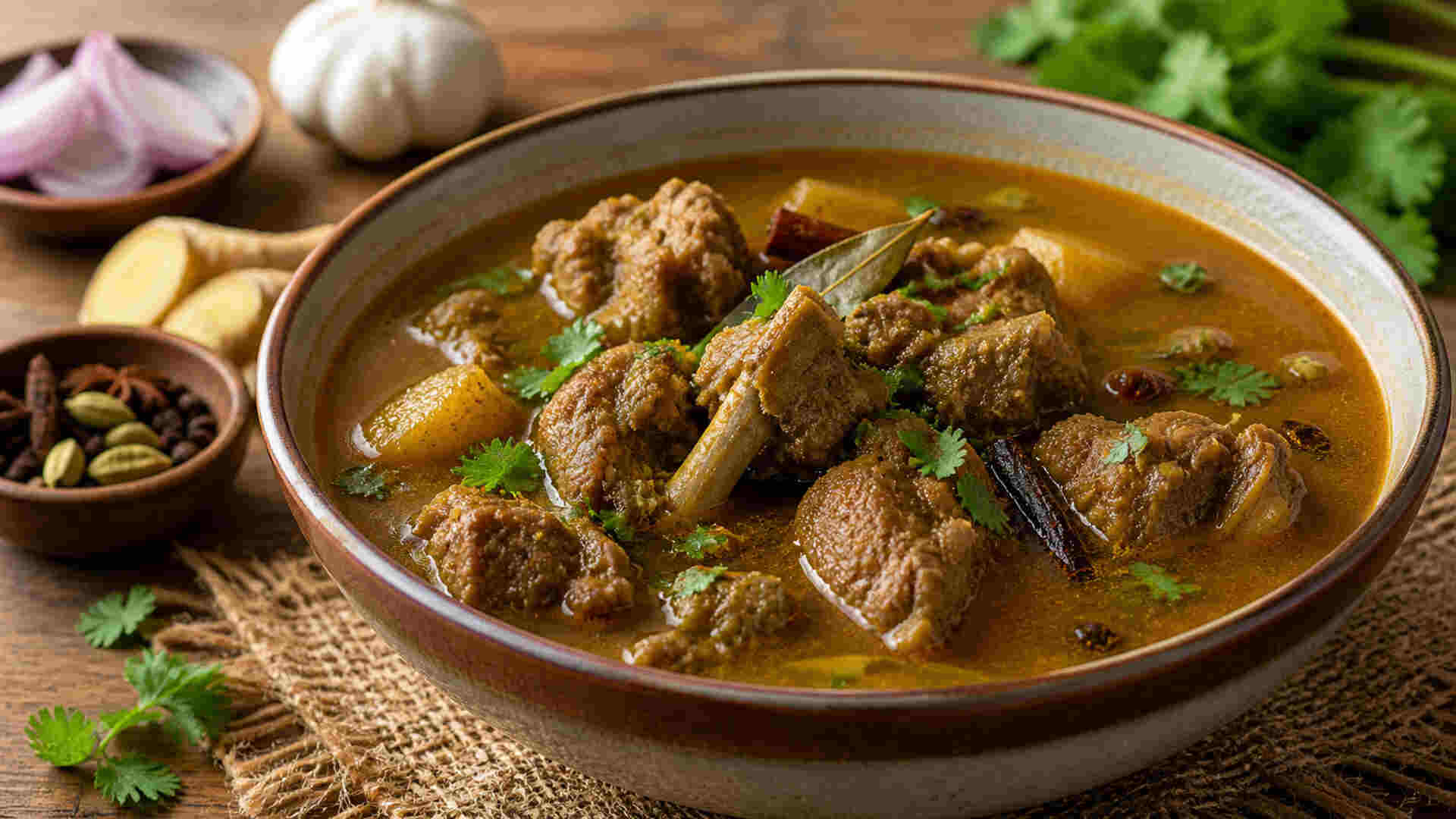
Unlike the rich, creamy, and spice-heavy mutton curries of North India, Khasi Manso Jhol represents a completely different culinary philosophy—one that celebrates balance, simplicity, and the natural flavor of meat. This traditional Odia dish is a soulful preparation where tender mutton pieces are slow-cooked in a light, spiced broth that is both comforting and deeply satisfying.
The word “Khasi” refers to mutton (goat meat), “Manso” means meat, and “Jhol” translates to a thin, flavorful gravy. Together, the name perfectly captures the essence of this dish: a light mutton curry that is nourishing without being heavy.
What makes Khasi Manso Jhol truly special is its ability to deliver depth of flavor without relying on excessive oil, cream, or overpowering spices. Instead, it uses whole spices, fresh ginger, tomatoes, and a gentle cooking process to create a dish that feels both homely and refined.
Whether served during a relaxed Sunday lunch or a festive family gathering, this dish embodies comfort food at its finest—simple, aromatic, and deeply rooted in Odia tradition.
What is Khasi Manso Jhol?
Khasi Manso Jhol is a traditional Odia mutton curry known for its light consistency and aromatic broth. Unlike thick gravies loaded with masalas, this dish focuses on clarity of flavor and subtle spice infusion.
At its core, the dish consists of:
- Tender mutton pieces
- A thin, spiced gravy
- Whole spices like bay leaf, cinnamon, and cardamom
- Fresh ingredients like ginger and tomatoes
The cooking process involves slow simmering, allowing the meat to release its juices into the broth while absorbing the delicate flavors of the spices.
A Dish Rooted in Simplicity
One of the defining characteristics of Khasi Manso Jhol is its simplicity. It does not rely on heavy onion-based gravies or cream. Instead, it embraces a lighter approach where each ingredient has room to shine.
Everyday Comfort Food
While mutton dishes are often reserved for special occasions in many parts of India, Khasi Manso Jhol strikes a balance—it is special enough for gatherings yet simple enough to be enjoyed as everyday comfort food.
Why Khasi Manso Jhol Stands Out
Khasi Manso Jhol is not just another mutton curry—it’s a reflection of Odisha’s culinary identity.
1. Light Yet Flavorful
The biggest distinction of this dish is its lightness. Unlike rich curries that can feel heavy after a meal, this jhol is easy to digest while still being deeply satisfying.
The broth carries a gentle warmth from spices without overwhelming the palate, making it ideal for those who prefer subtle flavors.
2. Focus on Natural Taste of Mutton
In many curries, strong spices dominate the dish. Here, the goal is different—the spices are used to enhance, not mask, the natural flavor of the meat.
Slow cooking ensures that the mutton becomes tender while releasing its essence into the broth.
3. Minimal Use of Oil and Spices
This dish aligns with a more health-conscious approach to cooking. The use of oil is minimal, and the spice blend is simple, making it lighter on the stomach.
4. Deep Cultural Connection
Khasi Manso Jhol is often associated with home-cooked meals, family gatherings, and traditional Odia cuisine. It carries a sense of nostalgia and warmth that goes beyond taste.
Ingredients Required for Khasi Manso Jhol
A hallmark of this dish is its reliance on simple, fresh ingredients that come together to create a beautifully balanced curry.
For the Mutton Preparation
- 500–700 grams mutton (bone-in pieces preferred)
- 1 teaspoon turmeric powder
- Salt to taste
For the Curry Base
- 2 tablespoons mustard oil or neutral oil
- 1 large onion (finely sliced)
- 2 medium tomatoes (chopped)
- 1 tablespoon ginger paste
- 4–5 garlic cloves (optional but recommended)
Whole Spices for Aroma
- 1 bay leaf
- 1-inch cinnamon stick
- 2–3 green cardamoms
- 3–4 cloves
Dry Spices
- 1 teaspoon turmeric powder
- 1 teaspoon coriander powder
- ½ teaspoon cumin powder
- Salt as needed
Optional Additions
- Potatoes (halved, traditional addition in many Odia curries)
- Fresh coriander leaves for garnish
Step-by-Step Recipe to Make Khasi Manso Jhol
Step 1: Marinate the Mutton
Wash the mutton thoroughly and marinate it with turmeric and salt. Let it rest for at least 20–30 minutes. This step not only enhances flavor but also helps tenderize the meat slightly before cooking.
Step 2: Heat Oil and Add Whole Spices
Heat mustard oil until it reaches its smoking point, then reduce the flame. Add bay leaf, cinnamon, cardamom, and cloves. Let them release their aroma—this forms the flavor base of the curry.
Step 3: Sauté Onions
Add sliced onions and cook until they turn soft and lightly golden. Unlike heavy curries, you don’t need to brown them deeply. The goal is to maintain the lightness of the dish.
Step 4: Add Ginger, Garlic, and Tomatoes
Add ginger paste and garlic, sautéing until the raw smell disappears. Then add chopped tomatoes and cook until they soften and blend into the mixture, forming a light base.
Step 5: Add Dry Spices
Add turmeric, coriander powder, cumin powder, and salt. Cook briefly to allow the spices to release their flavors.
Step 6: Add Mutton and Cook
Add the marinated mutton pieces and mix well with the masala. Cook for a few minutes to allow the meat to absorb the flavors.
Step 7: Add Water and Slow Cook
Add enough water to create a light broth. Cover and cook on low flame until the mutton becomes tender. This can take 30–45 minutes depending on the cut.
(You can also use a pressure cooker for faster cooking.)
Step 8: Final Simmer
Once the mutton is cooked, let the curry simmer uncovered for a few minutes to enhance flavor. Adjust salt and consistency as needed.
Step 9: Garnish and Serve
Garnish with fresh coriander leaves and serve hot.
Tips to Make Perfect Khasi Manso Jhol
- Use bone-in mutton for richer flavor
- Cook on low flame for best results
- Avoid overuse of spices to maintain authenticity
- Add potatoes for a traditional touch
- Let the curry rest before serving for deeper flavor
Variations of Khasi Manso Jhol
- Potato-Based Version: Adding potatoes makes the dish more filling and adds a subtle sweetness to the broth.
- Pressure Cooker Version: For convenience, cook the mutton in a pressure cooker to save time without compromising taste.
- Spicier Version: Add green chilies if you prefer a bit more heat.
- Rustic Village Style: In traditional homes, the dish is often cooked over wood fire, giving it a smoky depth.
Nutritional Benefits of Khasi Manso Jhol
This dish offers a balanced nutritional profile:
- High-quality protein for muscle health
- Iron and B vitamins from mutton
- Low oil content compared to heavy curries
- Easily digestible broth
What to Serve with Khasi Manso Jhol
This light curry pairs beautifully with simple sides:
- Steamed rice
- Pakhala Bhata
- Simple dal
- Light vegetable stir-fries
The simplicity of these accompaniments enhances the delicate flavors of the jhol.
Conclusion
Khasi Manso Jhol is a beautiful reminder that great food doesn’t always have to be rich or complicated. Its light, aromatic broth and tender mutton make it a comforting dish that you can enjoy without feeling weighed down.
It reflects the essence of Odia cuisine—simple ingredients, balanced flavors, and a deep connection to tradition.
Whether you’re exploring regional Indian dishes or looking for a lighter alternative to heavy curries, this dish is a must-try.