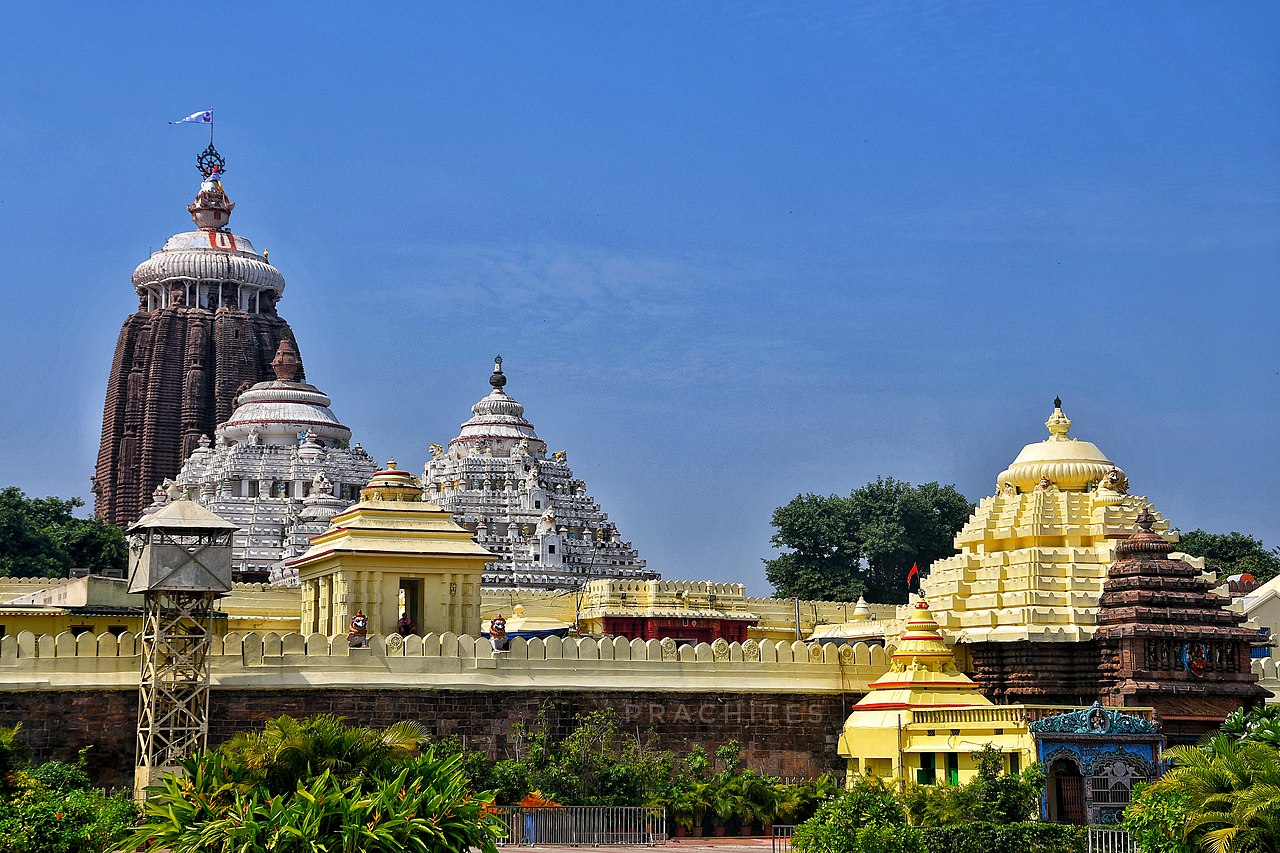
The Jagannath Puri Temple, located in the coastal town of Puri, Odisha, is one of the most sacred pilgrimage sites in India and a cornerstone of Hindu spirituality. Known worldwide for the grand Rath Yatra, the temple attracts millions of devotees every year who come to witness ancient rituals, deep-rooted traditions, and architectural brilliance.
The Rath Yatra, held annually, is believed to be the oldest chariot festival in the world. It commemorates the divine journey of Lord Jagannath, Lord Balabhadra, and Goddess Subhadra from the main Jagannath Puri Temple to the Gundicha Temple, symbolizing a visit to their maternal aunt’s home.
Below is a detailed guide covering facts about Jagannath Puri Temple, its history, location, timings, distance details, and fascinating traditions associated with Rath Yatra.
Jagannath Puri Temple History: A Legacy of Faith
The Jagannath Puri Temple history dates back to the 12th century and is closely associated with King Anantavarman Chodaganga Deva of the Eastern Ganga dynasty. Built in the iconic Kalinga architectural style, the temple stands as a symbol of devotion, inclusivity, and cosmic balance.
The presiding deities — Lord Jagannath (a form of Lord Vishnu), Lord Balabhadra, and Goddess Subhadra — are worshipped in unique wooden forms that are ceremonially replaced during Nabakalebara, a rare ritual held every few years.
Jagannath Puri Temple Location & Accessibility
- Jagannath Puri Temple location: Puri, Odisha, India
- Situated near the eastern coastline, the temple is part of the sacred Char Dham Yatra.
Jagannath Puri Temple Nearest Railway Station
- Puri Railway Station (approx. 2–3 km from the temple)
Jagannath Puri Temple Distance (Approx.)
- From Bhubaneswar: 60 km
- From Konark Sun Temple: 35 km
- From Puri Railway Station: 2–3 km
- From Biju Patnaik International Airport (Bhubaneswar): 65 km
Jagannath Puri Temple Timings
The Jagannath Puri Temple timings vary daily due to elaborate rituals, but generally:
- Temple opens: Around 5:00 AM
- Temple closes: Around 10:00 PM
Darshan timings depend on daily sevas like Mangala Aarti, Sakala Dhupa, Madhyana Dhupa, Sandhya Dhupa, and Bada Singara.
The 3 chariots of the Rath Yatra
The procession is likewise referred to as the event of chariots due to the fact that it witnesses the trip of 3 different chariots for Lord Jagannath, Lord Balarama as well as Siren Subhadra. While Lord Jagannath’s chariot Nandigosha carries on 18 wheels, Taladwaja, the chariot of Lord Balarama, is set on 16 wheels. And, Goddess Subhadra’s Padmadhwaja has 14 wheels.
A great deal of initiative goes into the production of these chariots
Fans played music as well as vocal singing during the 2012 Rath Yatra. The building and construction of the chariots begin on the advantageous event of Akshaya Tritiya. About 1,400 woodworkers are utilized each year to construct the 3 chariots. The chariots are constructed without the assistance of measuring tapes; instead, an old strategy of measurement is utilized where hands and fingers are utilized to gauge the size as well as breadth of the automobiles. Furthermore, wooden fixes and also joints are used rather than metal nails in the creation procedure.
The Chariot tops
The tops of the chariots are made in a manner that they reproduce the structure of the Jagannath Temple towers. A group of 15 competent tailors make the covers from 1,200 metres of towels.
The king will serve the Almighty
Prior to the commencement of the trip, the Gajapati (king) of Puri is meant to move the flooring with a golden mop. This basic act of cleaning up the lord’s course symbolizes that also the king is only a simple servant of God.
Lord Jagannath’s chariot declines to move ahead during the Rath Yatra. The chariots of Lord Jagannath, Balaram and Subhadra in front of Shree Jagannath’s holy place. Many supporters that have actually gone to the Rath Yatra have witnessed that Lord Jagannath seems hesitant to move, despite the number of individuals pulling his chariot. After hours of hard work, the rath lastly relocates, launching the procession’s forward march.
The anticipated downpour during Rath Yatra
According to documents, there’s not been a single Rath Yatra that really did not witness hefty downpours. The day of the event is greeted by rain every year (without fail).
Inside Jagannath Puri Temple: What Makes It Unique
Only Hindus are allowed inside Jagannath Puri Temple, a rule followed strictly on normal days. Inside the temple complex, devotees witness:
- The Ratna Simhasana (bejeweled throne)
- The sacred Mahaprasad, cooked in earthen pots using traditional methods
- One of the largest temple kitchens in the world
Interestingly, the temple flag always flutters against the direction of the wind, a phenomenon that remains unexplained.
Jagannath Puri Temple Facts You Should Know
Here are some interesting and lesser-known facts about Jagannath Puri Temple that fascinate devotees and historians alike:
- The temple is believed to have no shadow at any time of day
- Birds are rarely seen flying above the temple dome
- The Sudarshan Chakra atop the temple appears to face the viewer from any angle
- The Mahaprasad quantity never falls short or goes to waste
- The wooden idols are changed periodically in a sacred ritual known as Nabakalebara
These Jagannath Puri Temple facts add to the divine mystery surrounding the shrine.
A festival that’s open to all
The Jagannath holy place practises lots of restrictions on normal days, including one that does not enable any individual other than Hindus to go to the holy place. Nonetheless, on the day of the Rath Yatra, anyone can seek the true blessings of Lord Jagannath as well as see his idolizer, regardless of caste as well as religion.
Words ‘juggernaut’ comes from the name ‘Jagannath’. The English term ‘juggernaut’ indicates “a substantial, powerful, and frustrating force.” Drawing ideas from the massive chariot of Lord Jagannath, the British created this word when they encountered a huge chariot during one Rath Yatra event.
Why Jagannath Puri Temple Remains Spiritually Unique
The Jagannath Puri Temple is not just a place of worship; it is a living tradition that blends mythology, history, architecture, and social equality. From its mysterious rituals to the globally celebrated Rath Yatra, the temple continues to inspire faith across generations.